Original: $28.95
-65%$28.95
$10.13The Story
Learning Outcomes
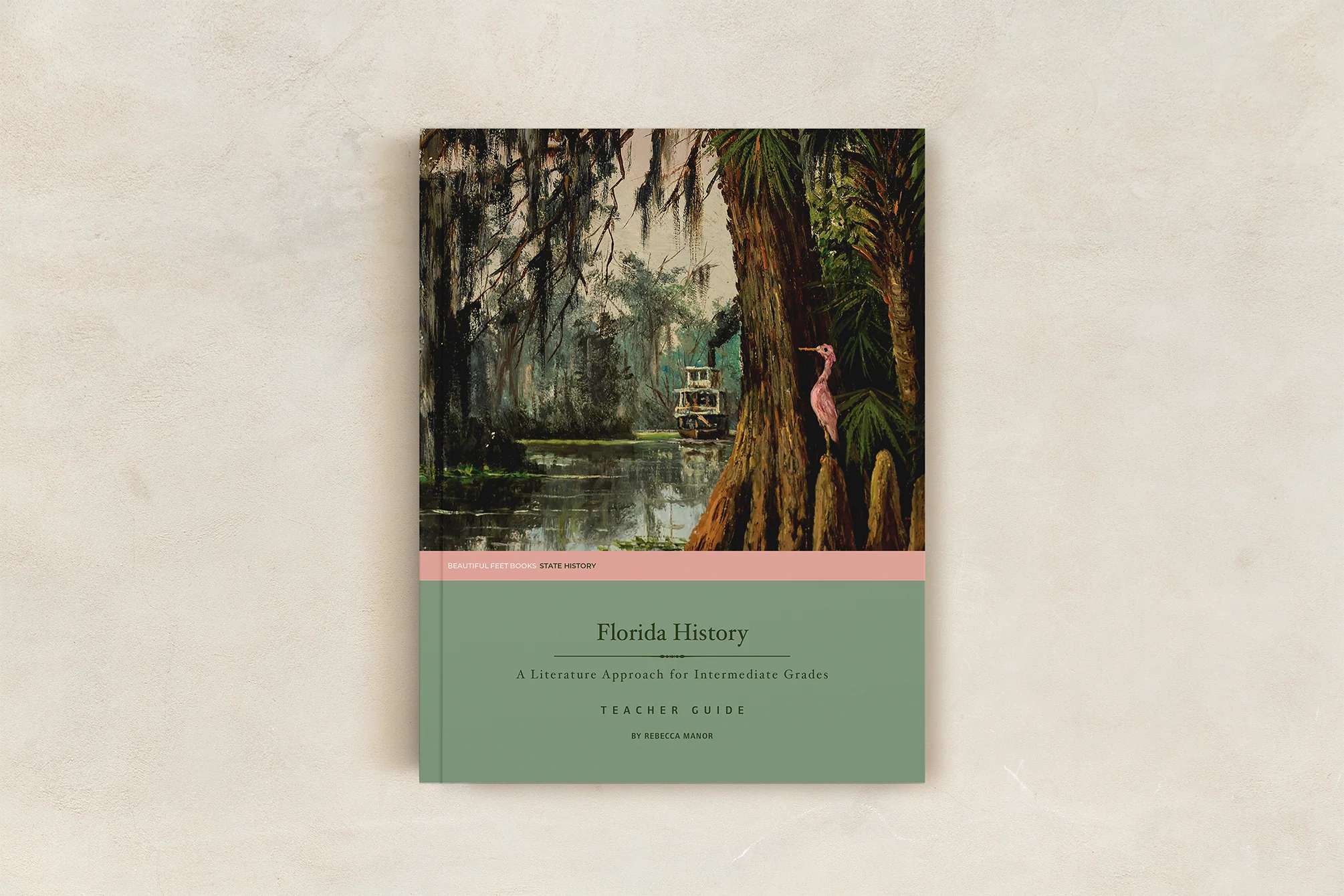
By the end of this Florida history homeschool curriculum, students in grades 4-6 will have built a rich, lasting understanding of Florida's past and present, geography, and culture–from its first Indigenous inhabitants to its fascinating role in the Space Race. This teacher guide leads families through living books, primary sources, hands-on activities, map work, and Socratic discussion, developing not only historical and geographical knowledge, but also nurturing a lifelong love of learning.
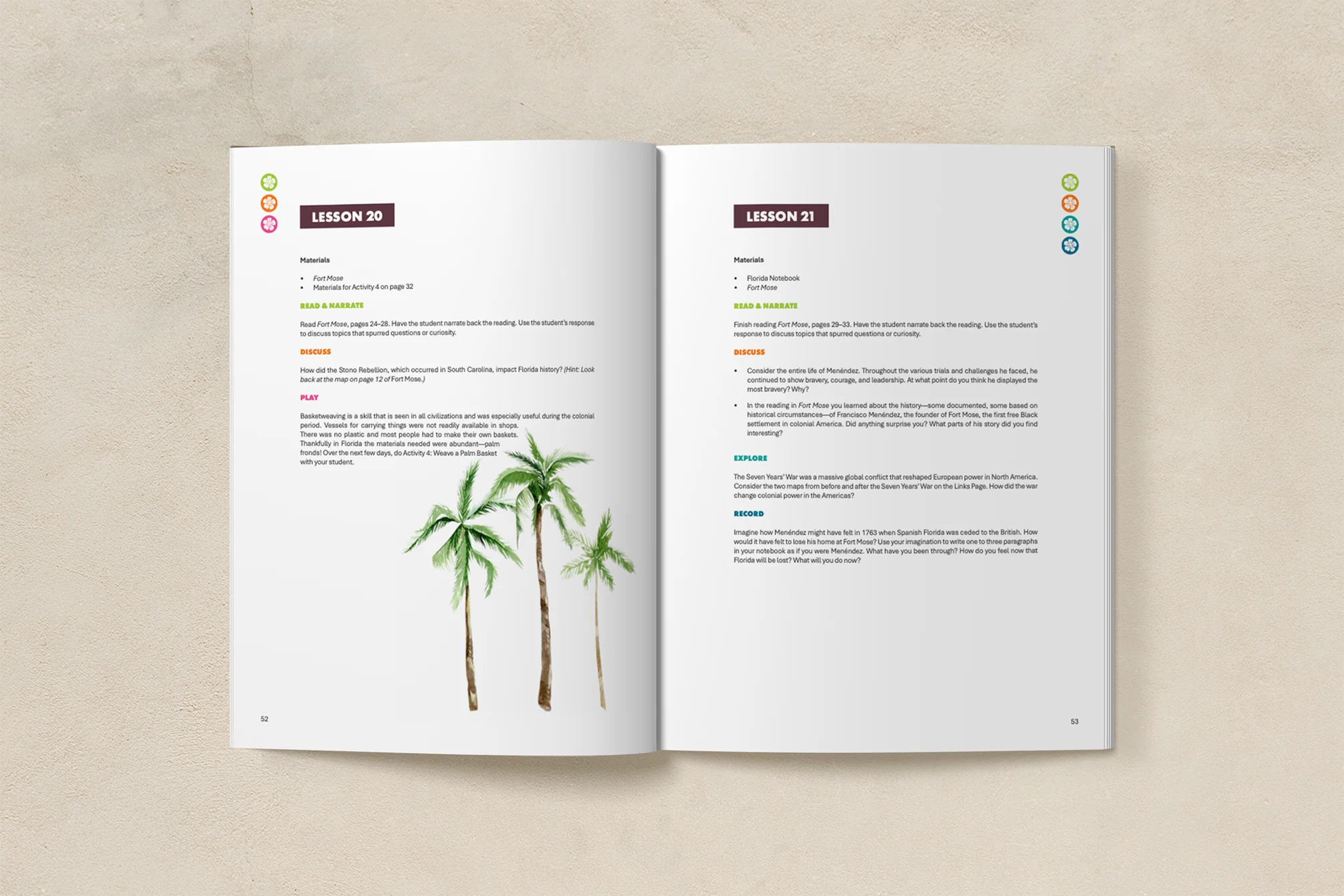
Florida History meets Florida's rigorous B.E.S.T. standards while keeping sight of what matters most: impactful literature, enduring lessons in character and history, and joyful learning. Lessons are structured built around five elements: Read & Narrate, Discuss, Record, Explore, and Play, giving each school day a natural rhythm that is both structured and flexible.
Skills Developed
- Historical thinking and chronological reasoning through narrative and Socratic discussion
- Geography skills and spatial awareness through ongoing Florida map work
- Narration and oral expression–cornerstones of Charlotte Mason and living books education
- Vocabulary development and written reflection through the consumable Florida Notebook
- Critical thinking and moral reasoning through open-ended discussion prompts
- Research and independent inquiry through Explore sections and Rabbit Trail library extensions
- Hands-on learning through crafts, activities, and real-world connections to Florida history and geography
Topics Covered
This Florida state history teacher guide for grades 4-6 spans five eras of Florida's remarkable story:
Indigenous Peoples and Pre-Columbian Era (before 1513): The Calusa, Timucua, and other First Peoples · Shell mound civilizations · Three Sisters farming · Pre-colonial village life
Spanish Exploration and Colonization (1513–1763): Ponce de León · Cabeza de Vaca · Fort Mose and the first legally recognized free Black settlement in America · Spanish missions
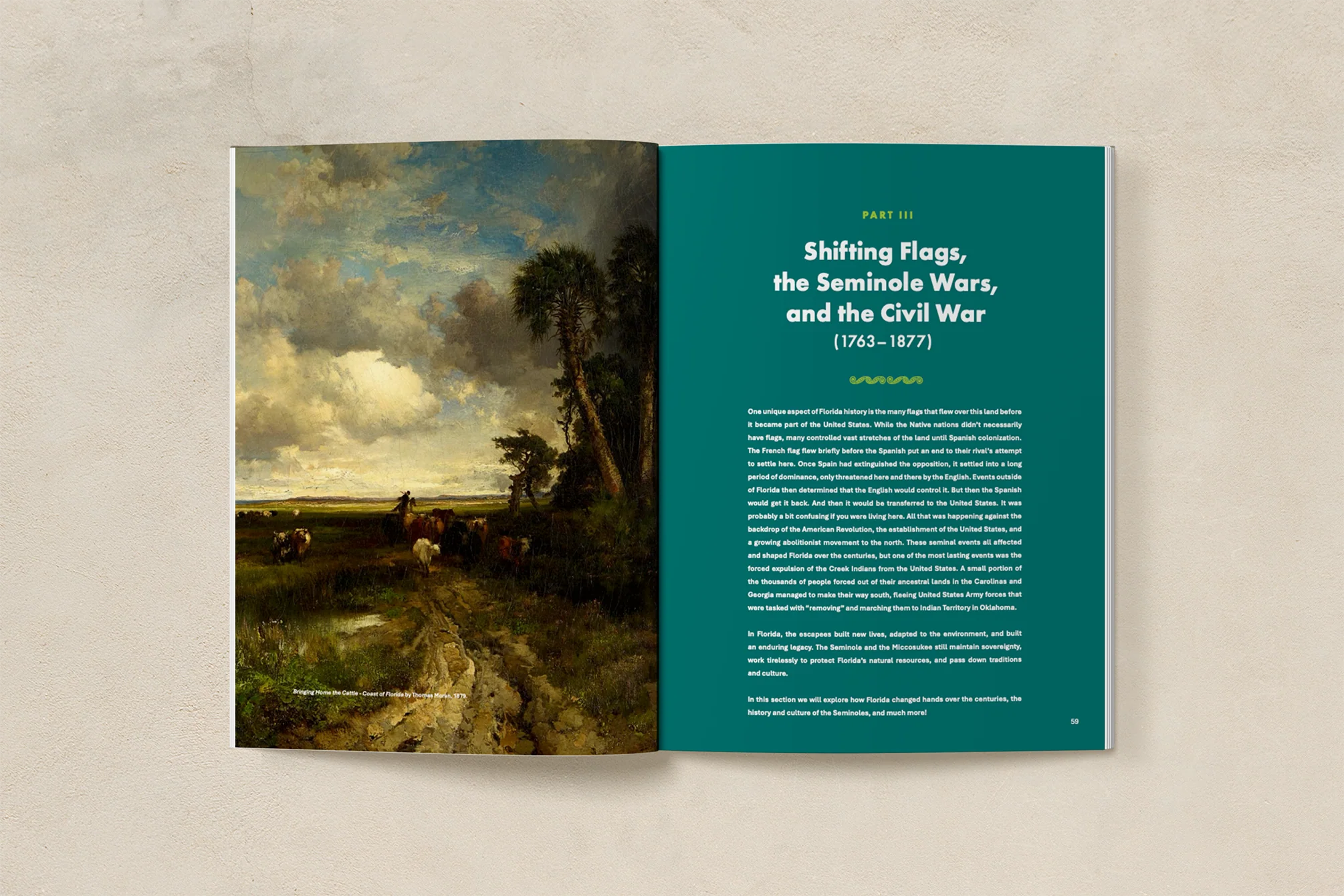
Shifting Flags, the Seminole Wars, and the Civil War (1763–1877): British and Spanish rule · The Seminole people and their resistance · Statehood and the Civil War
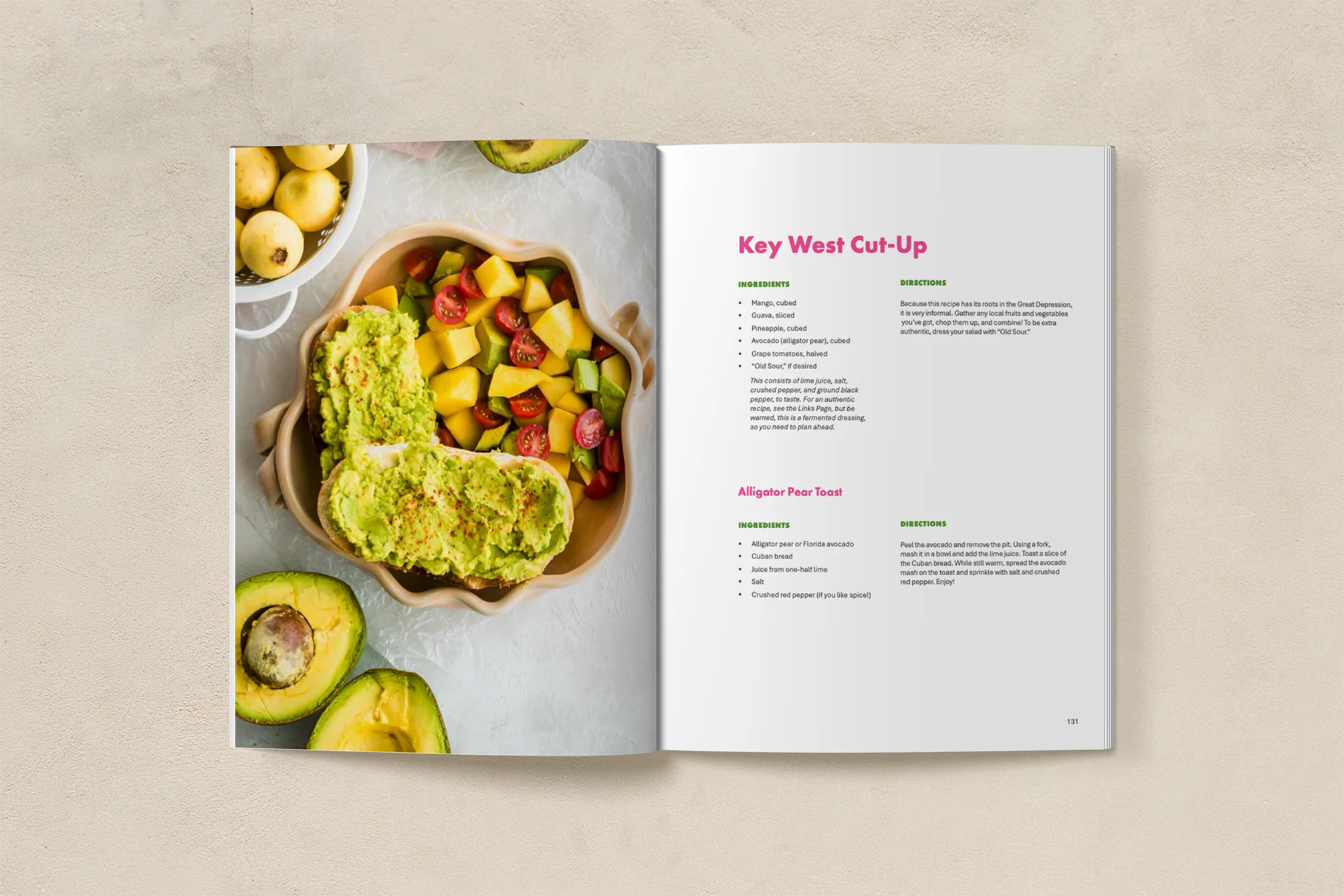
Growth, Development, War, and Depression (1877–1940): Henry Flagler and the Florida railroad · The real estate boom and bust · Pioneer life · Hurricanes · The Great Depression in Key West
World War II and the Making of Modern Florida (1940–Present): WWII on Florida's shores · The Space Race and Cape Canaveral · The Cuban Revolution and immigration · The Everglades conservation movement · Modern Florida
Curriculum Overview
This teacher guide includes 113 open-and-go lessons of approximately 30 minutes each, designed to be completed in one year at 3 lessons per week, or spread over two years for a more relaxed pace. Every lesson weaves together living books, narration, discussion, Florida geography map work, and notebook activities.
Hands-on activities include building a shell mound, planting a Three Sisters garden, constructing a model pre-colonial Florida village, and more. Guided field trip ideas bring the story of Florida to life beyond the page, from historic sites to the ecosystems at the heart of this study. Rabbit Trail reading lists offer optional library picks for families who want to dig deeper into Florida's history, geography, and culture.
Who It's For
Florida History is designed for homeschool students in 4th, 5th, and 6th grade and is an ideal fit for:
- Charlotte Mason homeschoolers looking for a living books-based state history curriculum
- Florida families seeking a curriculum that meets B.E.S.T. standards while keeping learning joyful and flexible
- Homeschool families drawn to narrative history, geography, and literature-based learning
- Multi-grade families–easily adapted for family-style learning across grade levels
No prior history curriculum required, this study is open and go from day one.
*We recommend that each student have their own Florida Notebook and Florida Map for this study.
Details & Craftsmanship
Every detail has been carefully considered to bring you the perfect product.
Details & Craftsmanship
Every detail has been carefully considered to bring you the perfect product.
Details & Craftsmanship
Every detail has been carefully considered to bring you the perfect product.
Description
Learning Outcomes
By the end of this Florida history homeschool curriculum, students in grades 4-6 will have built a rich, lasting understanding of Florida's past and present, geography, and culture–from its first Indigenous inhabitants to its fascinating role in the Space Race. This teacher guide leads families through living books, primary sources, hands-on activities, map work, and Socratic discussion, developing not only historical and geographical knowledge, but also nurturing a lifelong love of learning.
Florida History meets Florida's rigorous B.E.S.T. standards while keeping sight of what matters most: impactful literature, enduring lessons in character and history, and joyful learning. Lessons are structured built around five elements: Read & Narrate, Discuss, Record, Explore, and Play, giving each school day a natural rhythm that is both structured and flexible.
Skills Developed
- Historical thinking and chronological reasoning through narrative and Socratic discussion
- Geography skills and spatial awareness through ongoing Florida map work
- Narration and oral expression–cornerstones of Charlotte Mason and living books education
- Vocabulary development and written reflection through the consumable Florida Notebook
- Critical thinking and moral reasoning through open-ended discussion prompts
- Research and independent inquiry through Explore sections and Rabbit Trail library extensions
- Hands-on learning through crafts, activities, and real-world connections to Florida history and geography
Topics Covered
This Florida state history teacher guide for grades 4-6 spans five eras of Florida's remarkable story:
Indigenous Peoples and Pre-Columbian Era (before 1513): The Calusa, Timucua, and other First Peoples · Shell mound civilizations · Three Sisters farming · Pre-colonial village life
Spanish Exploration and Colonization (1513–1763): Ponce de León · Cabeza de Vaca · Fort Mose and the first legally recognized free Black settlement in America · Spanish missions
Shifting Flags, the Seminole Wars, and the Civil War (1763–1877): British and Spanish rule · The Seminole people and their resistance · Statehood and the Civil War
Growth, Development, War, and Depression (1877–1940): Henry Flagler and the Florida railroad · The real estate boom and bust · Pioneer life · Hurricanes · The Great Depression in Key West
World War II and the Making of Modern Florida (1940–Present): WWII on Florida's shores · The Space Race and Cape Canaveral · The Cuban Revolution and immigration · The Everglades conservation movement · Modern Florida
Curriculum Overview
This teacher guide includes 113 open-and-go lessons of approximately 30 minutes each, designed to be completed in one year at 3 lessons per week, or spread over two years for a more relaxed pace. Every lesson weaves together living books, narration, discussion, Florida geography map work, and notebook activities.
Hands-on activities include building a shell mound, planting a Three Sisters garden, constructing a model pre-colonial Florida village, and more. Guided field trip ideas bring the story of Florida to life beyond the page, from historic sites to the ecosystems at the heart of this study. Rabbit Trail reading lists offer optional library picks for families who want to dig deeper into Florida's history, geography, and culture.
Who It's For
Florida History is designed for homeschool students in 4th, 5th, and 6th grade and is an ideal fit for:
- Charlotte Mason homeschoolers looking for a living books-based state history curriculum
- Florida families seeking a curriculum that meets B.E.S.T. standards while keeping learning joyful and flexible
- Homeschool families drawn to narrative history, geography, and literature-based learning
- Multi-grade families–easily adapted for family-style learning across grade levels
No prior history curriculum required, this study is open and go from day one.
*We recommend that each student have their own Florida Notebook and Florida Map for this study.