Original: $42.99
-65%$42.99
$15.05The Story
Learning Outcomes
By the end of Far Afield, students in grades 4-6 will have established foundational understanding of multiple scientific disciplines. Through fieldwork, citizen science, and hands-on experiments spanning homeschool physics, chemistry, botany, ecology, zoology, and more, students will build both scientific knowledge and nurture the habits of wonder and delight.
Grounded in the Schullandheim tradition, an approach rooted in outdoor exploration, observation and living books, this literature-based science curriculum teaches students to observe closely, ask thoughtful questions, discuss scientific concepts, and document findings the way real scientists do.
Skills Developed
-
Scientific observation and documentation through nature journaling and logbook field notes
-
Watercolor illustration and botanical drawing as tools of scientific inquiry and observation
-
Hands-on experimentation across physics, chemistry, ecology, and engineering
-
Taxonomy and classification using dichotomous keys and field guides
-
Research and scientific writing through open-ended inquiry prompts
-
Citizen science participation, ecological surveying, and real-world fieldwork
-
Critical thinking across life science, earth science, physical science, and engineering design
Topics Covered
Far Afield spans Life Science, Physical Science, and Earth Science in alignment with NGSS standards for grades 4–6.
Life Science: Anatomy & Physiology · Botany · Classification & Taxonomy · Ecology · Environmental History · Genetics · Microbiology · Zoology
Physical Science: Chemistry · Engineering · Mechanics · Physics
Earth Science: Meteorology · Soil Science · Paleontology · Earth Systems & Water Cycles
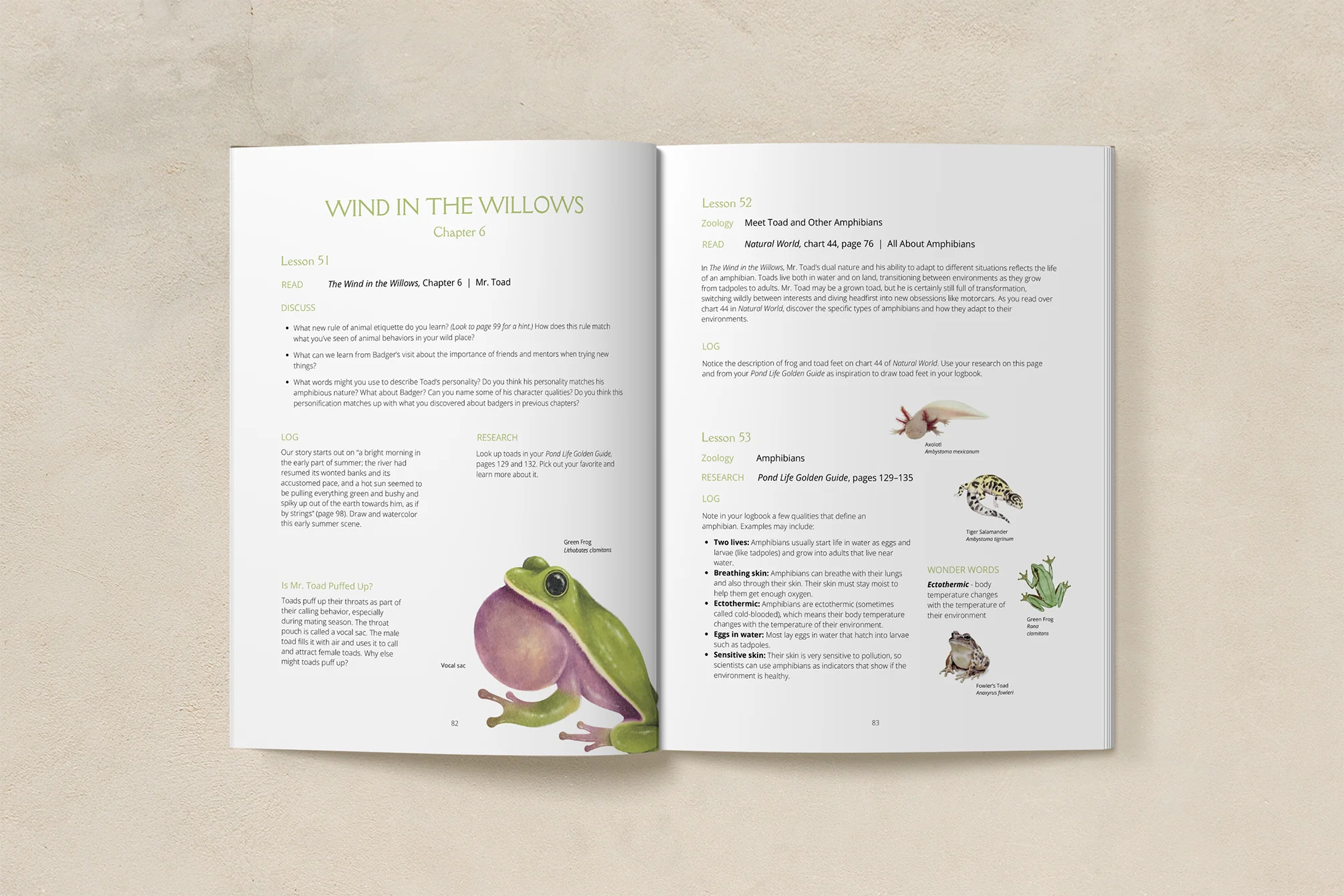
Lessons follow the narrative arc of The Wind in the Willows, shaping a distinctive, wonder-based science curriculum for middle grade homeschool students.
What's Included
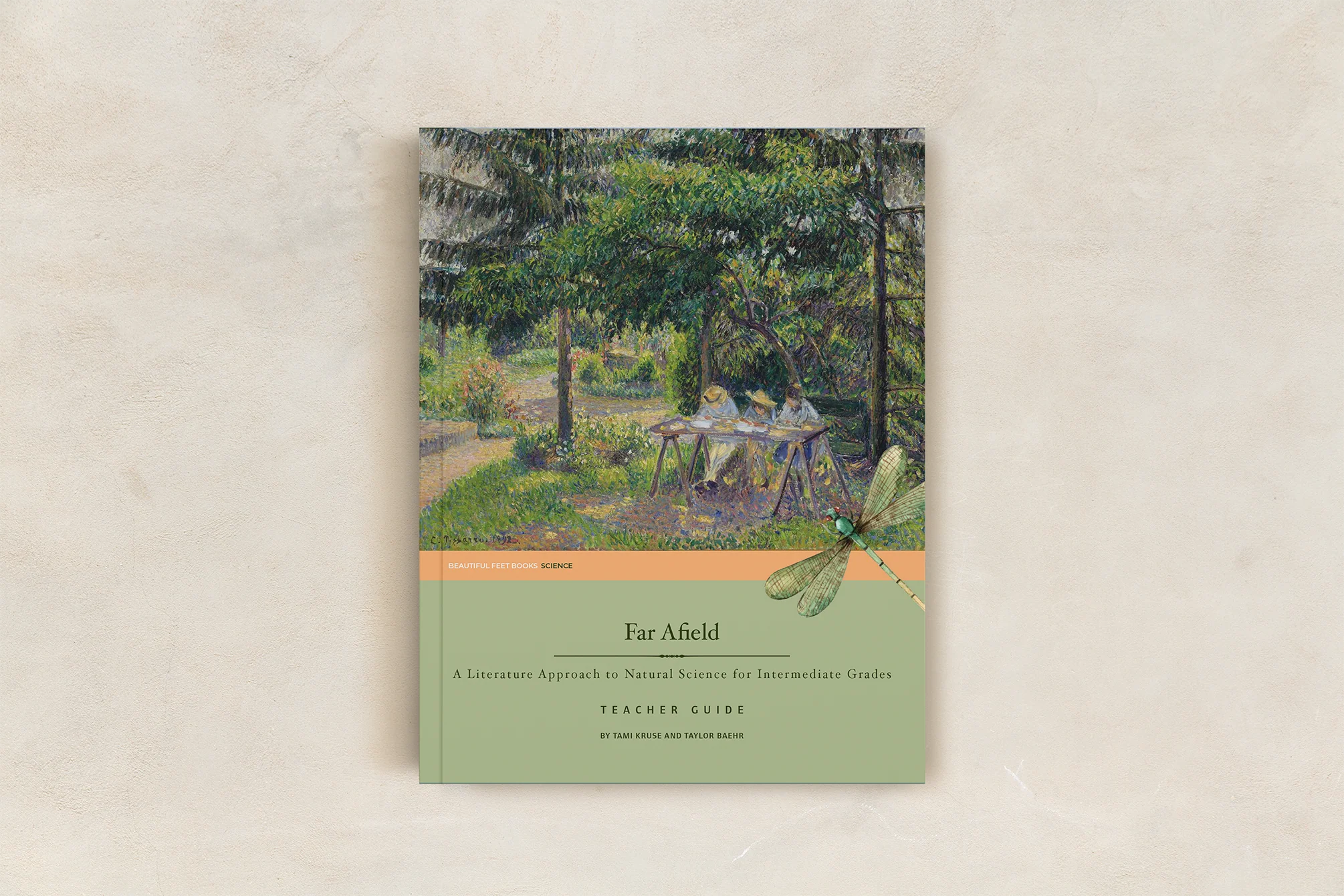
The Far Afield Teacher Guide contains 104 lessons of approximately 30-60 minutes each, designed to be completed in one year at 3 lessons per week, or stretched comfortably over two years. Lessons are anchored in a curated selection of living books, field guides, and illustrated compendia, with full guidance for every reading, discussion, experiment, and illustration activity.
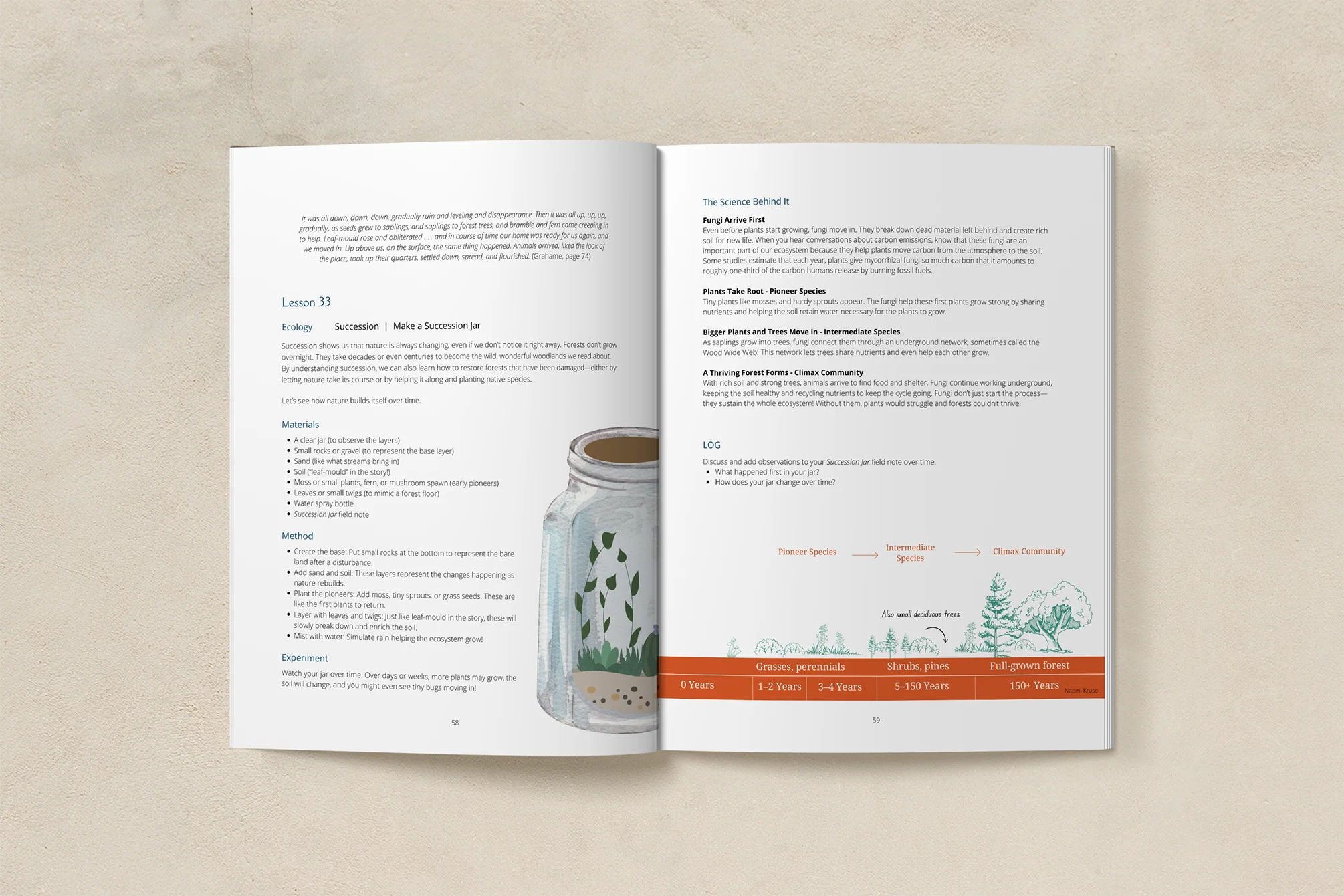
Hands-on activities include making a walnut sailboat, building a lemon battery, assembling a succession jar, conducting an ecological survey, making homemade litmus paper, and guided watercolor lessons throughout. Guided field trip days–to a natural history museum, Christmas bird count, observatory or planetarium, and zoo–extend learning into the real world.
Who It's For
The Far Afield Teacher Guide is designed for homeschool students in grades 4-6 and is an ideal fit for families seeking a literature-based homeschool science curriculum. A natural choice for Charlotte Mason homeschoolers and those who value living books, nature study, and hands-on science. It's well-suited for any family looking for a comprehensive homeschool science curriculum for middle grades that meets rigorous NGSS standards. No prior science curriculum required.
The Teacher Guide is designed to be used alongside the Far Afield Logbook and Watercolor Cards, available separately. We recommend one set per student.
Details & Craftsmanship
Every detail has been carefully considered to bring you the perfect product.
Details & Craftsmanship
Every detail has been carefully considered to bring you the perfect product.
Description
Learning Outcomes
By the end of Far Afield, students in grades 4-6 will have established foundational understanding of multiple scientific disciplines. Through fieldwork, citizen science, and hands-on experiments spanning homeschool physics, chemistry, botany, ecology, zoology, and more, students will build both scientific knowledge and nurture the habits of wonder and delight.
Grounded in the Schullandheim tradition, an approach rooted in outdoor exploration, observation and living books, this literature-based science curriculum teaches students to observe closely, ask thoughtful questions, discuss scientific concepts, and document findings the way real scientists do.
Skills Developed
-
Scientific observation and documentation through nature journaling and logbook field notes
-
Watercolor illustration and botanical drawing as tools of scientific inquiry and observation
-
Hands-on experimentation across physics, chemistry, ecology, and engineering
-
Taxonomy and classification using dichotomous keys and field guides
-
Research and scientific writing through open-ended inquiry prompts
-
Citizen science participation, ecological surveying, and real-world fieldwork
-
Critical thinking across life science, earth science, physical science, and engineering design
Topics Covered
Far Afield spans Life Science, Physical Science, and Earth Science in alignment with NGSS standards for grades 4–6.
Life Science: Anatomy & Physiology · Botany · Classification & Taxonomy · Ecology · Environmental History · Genetics · Microbiology · Zoology
Physical Science: Chemistry · Engineering · Mechanics · Physics
Earth Science: Meteorology · Soil Science · Paleontology · Earth Systems & Water Cycles
Lessons follow the narrative arc of The Wind in the Willows, shaping a distinctive, wonder-based science curriculum for middle grade homeschool students.
What's Included
The Far Afield Teacher Guide contains 104 lessons of approximately 30-60 minutes each, designed to be completed in one year at 3 lessons per week, or stretched comfortably over two years. Lessons are anchored in a curated selection of living books, field guides, and illustrated compendia, with full guidance for every reading, discussion, experiment, and illustration activity.
Hands-on activities include making a walnut sailboat, building a lemon battery, assembling a succession jar, conducting an ecological survey, making homemade litmus paper, and guided watercolor lessons throughout. Guided field trip days–to a natural history museum, Christmas bird count, observatory or planetarium, and zoo–extend learning into the real world.
Who It's For
The Far Afield Teacher Guide is designed for homeschool students in grades 4-6 and is an ideal fit for families seeking a literature-based homeschool science curriculum. A natural choice for Charlotte Mason homeschoolers and those who value living books, nature study, and hands-on science. It's well-suited for any family looking for a comprehensive homeschool science curriculum for middle grades that meets rigorous NGSS standards. No prior science curriculum required.
The Teacher Guide is designed to be used alongside the Far Afield Logbook and Watercolor Cards, available separately. We recommend one set per student.